Строительные материалыBOSSONG#BOSSONG#Renewal and restoration#Structural consolidation products#Masonry consolidation#Construction
BOSSONG DIATONI & DIATONOS
Masonry made up of several non-engaged faces are recurrent in historic buildings. The damage mechanisms involving these elements, mainly identifiable in the detachment of faces due to the emergence of internal thrusts in masonry panels subject to the action of vertical loads, and in the non-monolithic behaviour of panels subject to overturning due to seismic action, are often the cause of the vulnerability of building organisms, and their control represents the first objective of any prevention intervention. In masonry built "in a workmanlike manner", the use of diatons, blocks woven orthogonally to the plane of the masonry panel and of a length sufficient to create interlocking between the faces, assumed a systematic character, whereas poorer masonry is for the most part devoid of them or characterised by an insufficient number of elements. In these cases, an intervention involving the insertion of artificial diatons may be decisive in improving the panel's response.
The insertion of artificial diatons can be decisive in improving the panel's response in terms of
- redistribution of loads in the wall thickness
- resistance to tensile stress or to internal thrusts within the wall thickness, which arise as a result of the action of vertical loads acting on panels made up of a mostly irregular wall texture
- resistance to the tangential action that causes sliding between the faces as a result of the panel's overturning action so as to guarantee the connection between the faces that will not respond to the overturning moment in isolation but with a monolithic arrangement, capable of offering a greater stabilising effect
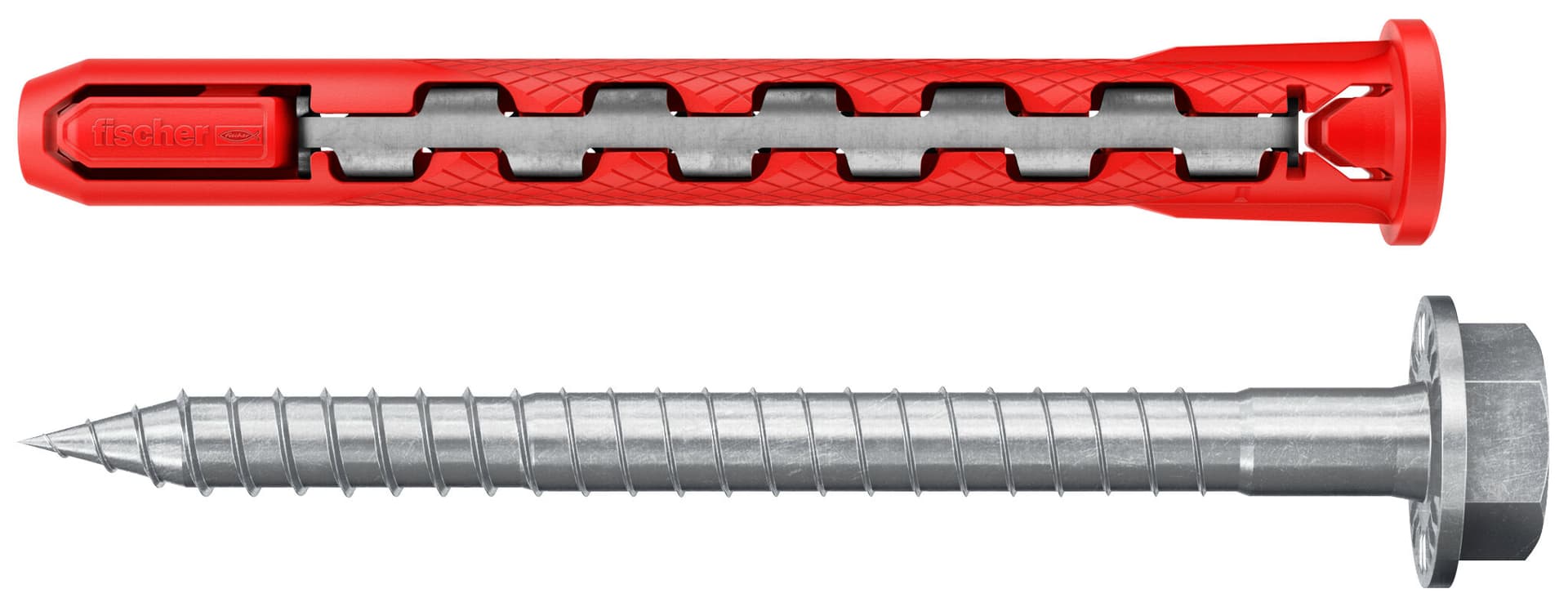
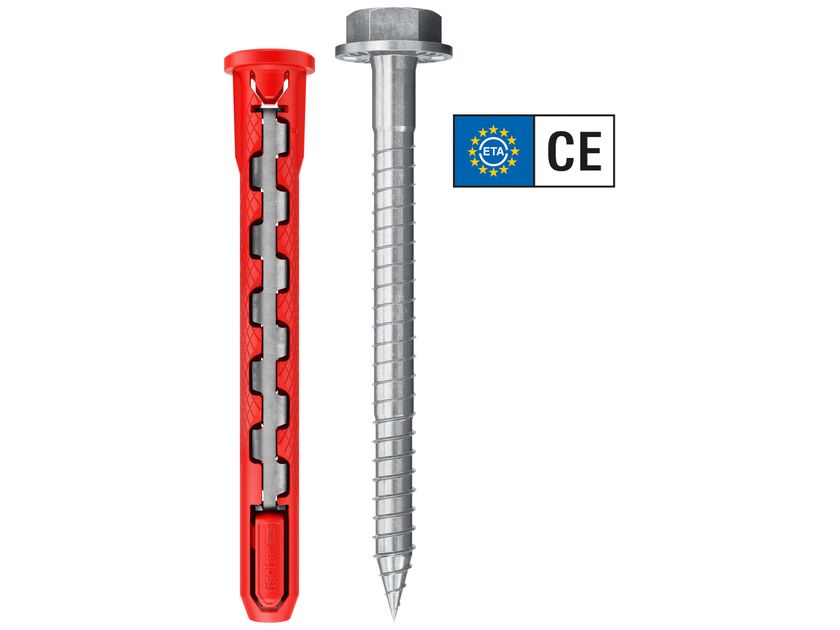
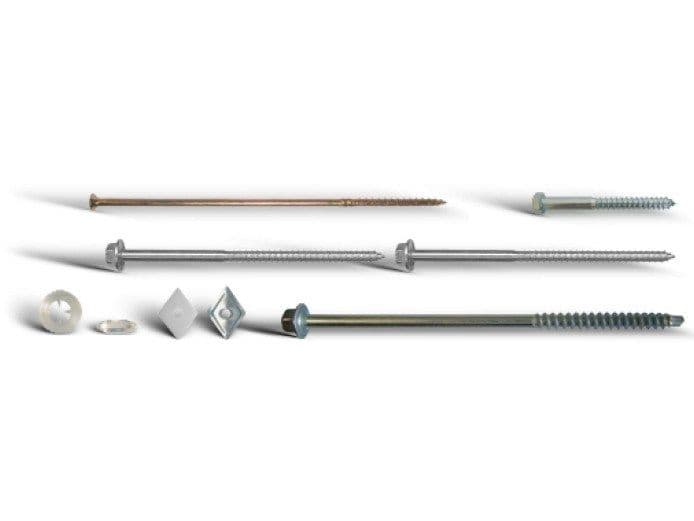
With respect to the traditional techniques described in the literature and recalled as effective for achieving an adequate connection between the wall faces in the NTC and in the 2007 directive, controlled injection anchorages, allow, thanks to the expansion of the sock that exerts a compression on the wall of the perforation during the pressure injection phase of the mortar, the restoration of the original flow of stresses, diverted during the drilling phase. An "inert" diagonal, inserted in a drill hole previously made in the substrate, will constitute a filling of the same but will hardly be able to take on those vertical actions deviated in the adjacent areas. The advantages that derive from the use of controlled injection anchors for the realisation of artificial diatones are also reflected in the aspects related to the conservation and respect of the existing masonry structure: a reduced perforation diameter compared to the solutions proposed by traditional techniques and the certainty that the injection mortar will not be dispersed inside the masonry, as well as the use of resistant stainless steel elements to guarantee the durability of the intervention over time.
FROM DIATONI TO DIATONOS
The recent research activity, conducted in collaboration with Prof. Ing. Antonio Borri of the University of Perugia, had as its main objectives the in-depth study of the behaviour of artificial expansion diatones and their performance enhancement introduced through pre-stressing and unstressing. This system, which goes by the name of 'diatonos', combines the benefits of intervention with artificial expansion diatones with the advantages deriving from interventions with anti-expulsion tie rods, known in the literature.
Diatonos after injection
Pre-stressing is introduced, prior to the coaxial mortar injection phase, in order to increase the existing interlocking between the faces, which is normally very low in masonry with little or no dampening. By pre-stressing the reinforcement with a tensile force applied with a special dynamometric spanner, following the curing of the injection mortar and the removal of the temporary contrast elements, the stress is transmitted, in terms of transverse compressive action, to the faces. The flaring at the ends, carried out with variable-diameter coring, improves the mechanism of transmission of transversal compression to the masonry, thanks to the emergence of horizontal components of the compressive action on the flared core, which are added to the tangential actions distributed over the surface of the core.
0
0