
Gallotta
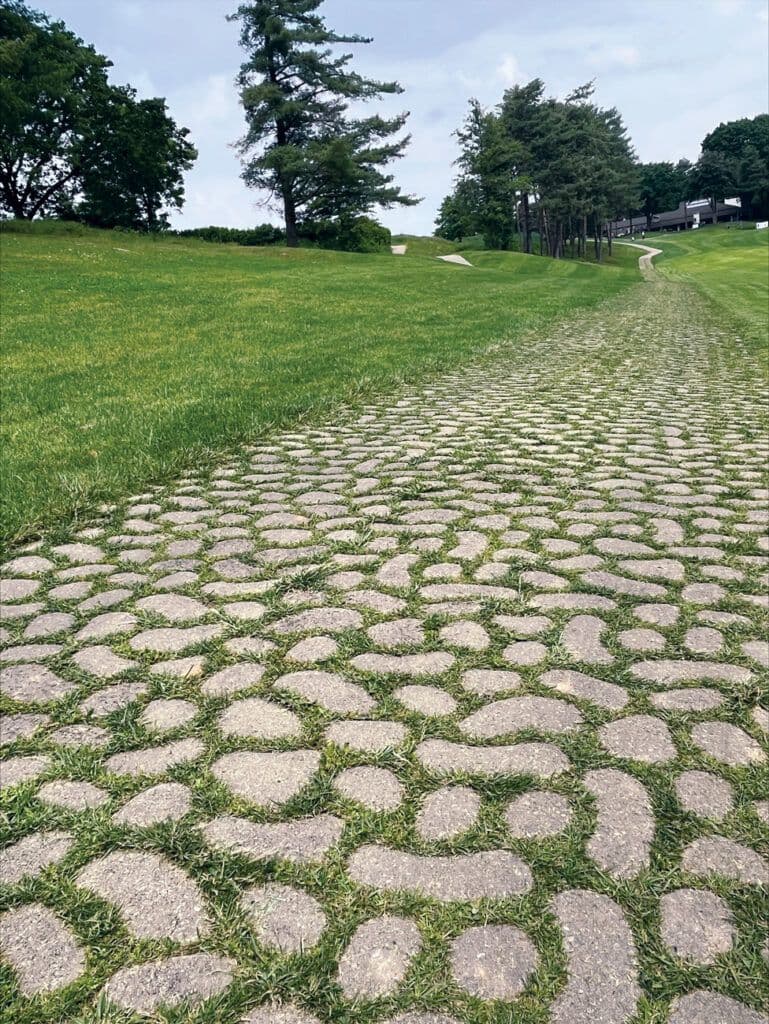
A pavement that recalls solemn city paths (who remembers their charm, now gone and often irretrievable…), as well as robust carriageways of village squares. A solution that, recalling the shape of the Cobblestone, makes the pavement particularly suitable in areas of evident historical value and artistic value, but also suitable for restoring a bit of ancient splendor to public and private residential areas. By filling the spaces between the pebbles with loose soil and sowing the lawn, we can see a green carpet created for vehicles. Given its draining quality, we can create parking areas without having to worry about rainwater discharges, thus not impoverishing the underlying aquifers.
GRASSY COBBLES
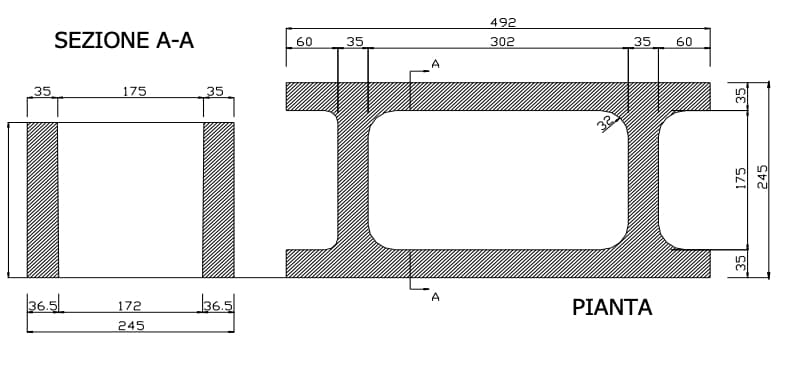
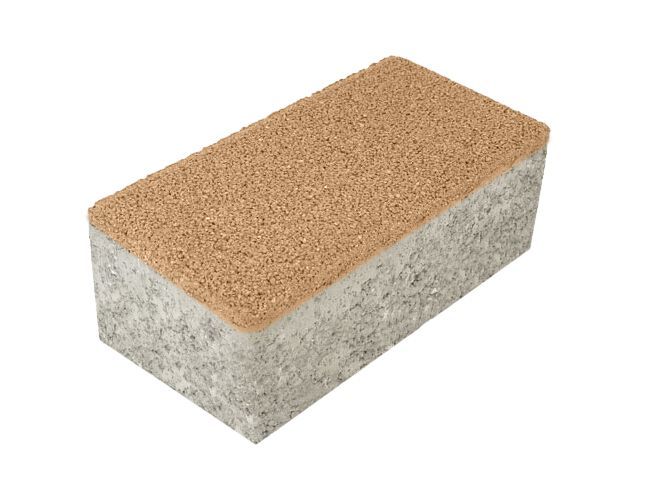
Pavement made with a perforated concrete plate measuring 50.4×25.2 cm, depicting a cobblestone with a flat walking surface. The ratio of the green part must be 25% compared to the surface of the artifact. The gratings are laid by placing them on carefully leveled and compacted ground, so as to ensure a reaction of the support surface in relation to the loads that the flooring will have to bear. They are placed next to each other by laying them on a light layer of sand. The through holes must be filled with high quality vegetable soil, slightly compacted, up to about 1 cm below the walking surface, then the lawn must be sown.
CEMENTED COBBLES
Flooring made with a perforated concrete plate measuring 50.4 x 25.2 cm, representing a cobblestone with a flat walking surface. The gratings are laid by placing them on a well-leveled cemented subfloor to ensure the sand, mixed with cement, has a constant thickness during the laying of the cobblestones.
The through holes and the laying joints must be saturated with a mixture of sand and cement and thoroughly wetted several times to help them grip.
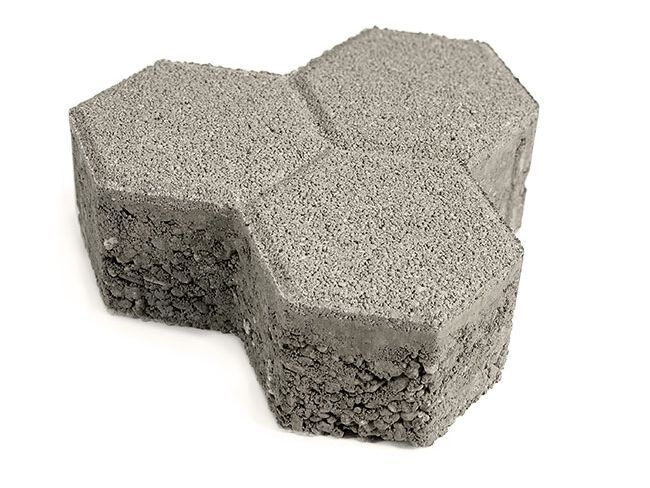
Combining nature and furnishings, having the comfort of a resistant flooring and blending it with the softness of the garden lawn. Gallotta self-locking draining grids and blocks are pieces specifically designed to cover areas where the lack of greenery can be compensated by a correct balance between floor and lawn. From the most classic pebbles to the most geometric shapes, a collection perfect for all spaces. Flooring made with draining blocks is used both in new construction projects and in the case of renovations, extraordinary maintenance and/or expansions, thus allowing the creation of alternative drainage systems to waterproof covers. The performance characteristics of a draining flooring is that of a sustainable management of rainwater, allowing the passage of rainwater through their surface, to dispose of it directly in the subsoil or collect it in accumulation tanks and then convey it to the sewer system. Draining floors can be used for new construction projects, extraordinary maintenance or expansions, thus creating alternative drainage systems. Furthermore, they are particularly suitable in those areas where it is difficult to manage the reconstruction of the sewers, but above all where the regulations prescribe a maximum percentage of rainwater that can flow into the public collection network. The advantages of these pavements are that of reducing flooding, where the sewer system is unable to dispose of the water load, and that of preventing the formation of surface puddles and aquaplaning phenomena.
0
0