PILKINGTON ITALIA#PILKINGTON ITALIA#Doors and windows#Architectural glasses#Float glass#Insulating glass and double glazing
PILKINGTON ITALIA Pilkington Optitherm™ Pro T Float low-e glass
For safety applications, there is a 'toughenable' version, Pilkington Optitherm™ S3 Pro T.
Pilkington Optitherm™ S3 Pro T must be toughened. Tempering by allowing the coating to cure, ensures mechanical, performance and colour stability. From an aesthetic point of view, it matches perfectly with the non-tempered version of Pilkington Optitherm™ S3 to allow maximum design freedom.
After tempering, the thermal and luminous performance and colour appearance are identical to the corresponding annealed glass.
Features & Benefits
- Low-E glass can be tempered directly from the glassworks;
- After tempering, Pilkington Optitherm™S3 T achieves the light and thermal performance of the corresponding annealed glass and matches the shades of Pilkington Optitherm™ S3;
- Available in 4mm, 6mm, 8mm and 10mm thicknesses, in large 6000 x 3210mm sheets.
FIELDS OF USE
The Pilkington Optitherm™ product range is the most popular thermal insulation solution, from window and door applications for residential buildings, to more complex applications for office and commercial buildings.
- Pilkington Optitherm™ S3 is a neutral, high light transmission solution suitable for most uses.
- Pilkington Optitherm™ S1 is the Ug = 1.0 W/m²K version to further improve the winter and summer energy efficiency of buildings.
- Pilkington Optitherm™ GS is the solution designed for triple glazing applications in passive house architecture. The very high neutrality and very high transmission make triple glazing aesthetically better.
- Pilkington Optitherm™ ProT is intended exclusively for conversion to toughened glass.
FEATURES AND PERFORMANCE
Glazing with Pilkington Optitherm™ is extremely neutral in colour.
Light transmission is high from 80 to 70% with a solar factor of 48 to 61%, depending on the type of Pilkington Optitherm™ product chosen.
In terms of Thermal Insulation, the thermal transmittance values Ug = 1.1 W/m²K in insulating glazing and Ug = 0.5 W/m²K in triple glazing are achieved.
With the Pilkington Optitherm™ S1 version, these values drop even further to Ug = 1.0 W/m²K and Ug = 0.4 W/m²K respectively.
For designers or processors interested in evaluating the performance of different insulating glass unit combinations assembled with thermal insulation products, we would like to remind you of the possibility of using the Pilkington Spectrum calculation software, available on-line at www.pilkington.it, which allows you to know the spectrophotometric and energy parameters of a particular insulating glass unit assembled with Pilkington products.
CERTIFICATIONS
The products in the Pilkington Optitherm™ range conform to UNI EN 1096 and meet the European directives on construction products.
The CE declaration of products is available on the website www.pilkington.com/CE
ITEM SPECIFICATIONS
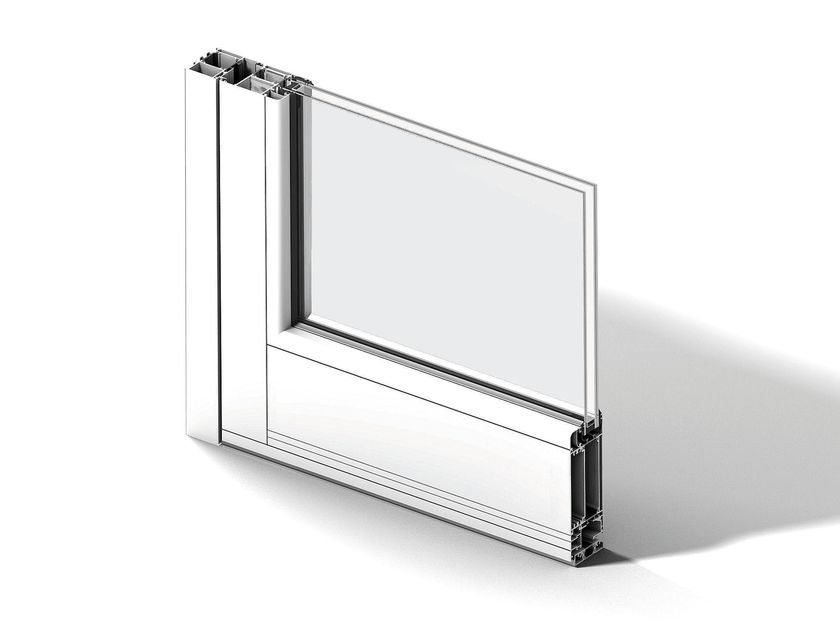
Pilkington Optitherm™ is a clear float glass sheet with a silver-based surface coating applied cold using a magnetron process; the coating gives the sheet low emissivity characteristics to improve the thermal insulation performance of glazing.
Glass from the Pilkington Optitherm™ range is designed to be assembled into insulating glazing. The low emissivity coating deposited off-line on the glass gives the Pilkington Optitherm™ range very high thermal insulation performance combined with excellent colour neutrality.
Solar energy enters the building mainly as short wave radiation but, once inside, is reflected from objects back to the glass as long wave radiation. Low-emission glass has a coating that effectively counteracts heat loss, allowing solar heat to enter and preventing the energy emitted from the interior radiating bodies from escaping. Heat loss is generally expressed as a U-value, which corresponds to the heat loss in Watts per square metre for each degree Kelvin of temperature difference between the interior and exterior (expressed as W/m2K); the lower the U-value, the better the insulation guaranteed by the product.
Basically, low-E glass reflects energy back into the room, with a significantly reduced heat loss compared to normal float glass. In addition, various types of low-e glass allow for passive solar gain of varying degrees, which helps reduce heating needs and costs, especially in the colder months.
0
0