Управление строительствомCDM Dolmen#CDM Dolmen#Software#Geotechnics and foundations#Loadbearing wall calculations#Retaining wall calculations
CDM Dolmen
IS GEOLOGIA is the group of geotechnical-geological modules for slope stability analysis, for the characterisation of soils from static and dynamic penetrometric tests, for the classification of rock faces and for the stability of rock faces.
IS GeoPendii: software dedicated to the stability analysis of slopes in loose soils based on boundary equilibrium methods. It is possible to perform calculations with more than one method simultaneously. The programme is equipped with an interactive graphic environment through which it is possible to define stratigraphy, stratum, loads and interventions.
Is GeoStrati: software for the numerical interpretation and graphic representation of the results of S.P.T. (Standard Penetration Test), D.P. (Continuous Dynamics) and C.P.T. (Cone Penetration Test) tests. It allows the calculation of geotechnical soil parameters using various correlations found in the literature.
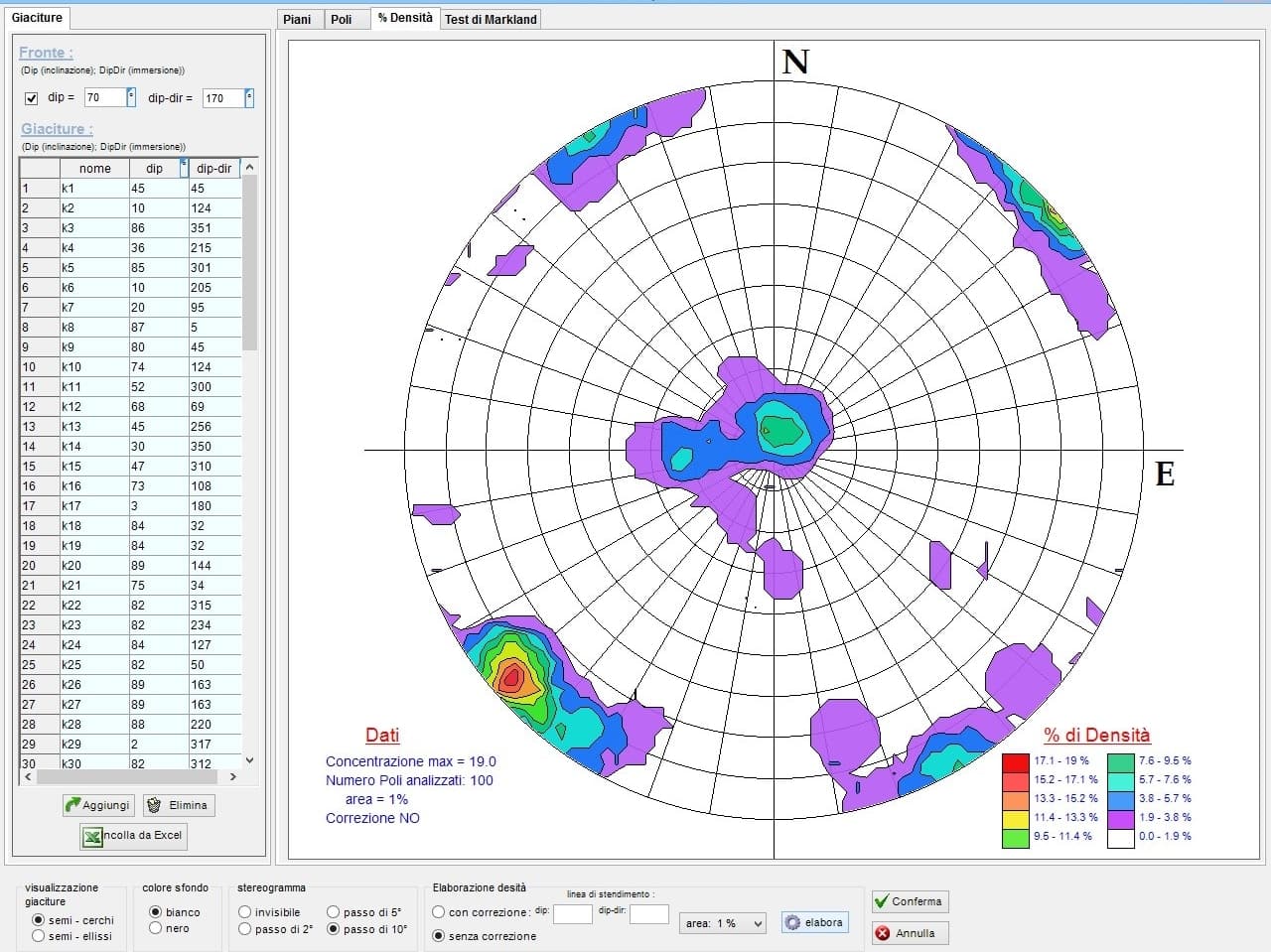
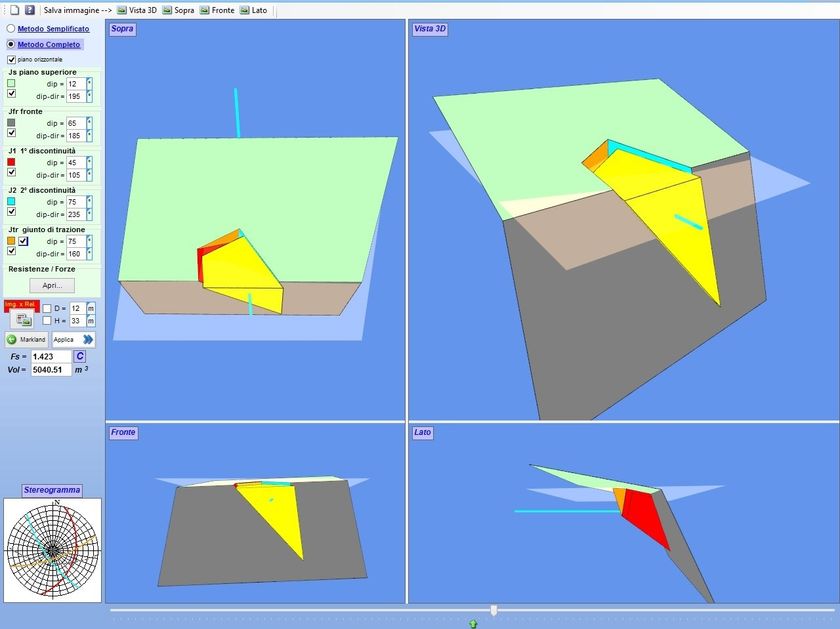
Is GeoRocce: software for the classification of rock faces and for the representation of discontinuities on a polar stereogram with calculation and visualisation in percentage of pole density and Markland test. Evaluates planar and wedge stability in rock, performs rockfall analysis along a slope.
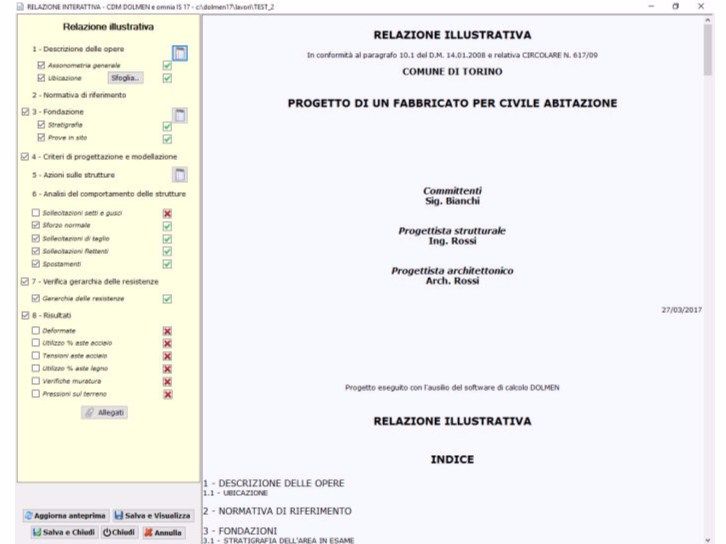
All software in the IS GEOLOGIA package allows the automatic creation of a complete and comprehensive calculation report.
PROPERTIES OF THE MODULES
IS GeoPendii
IS GeoPendii analyses the stability of slopes in loose soils based on the limit equilibrium methods according to the latest standards, both for the static case and the dynamic case.
The programme is equipped with an interactive graphic environment through which it is possible to define the case to be analysed: stratigraphy, water table, loads and interventions. The stratigraphy and water table can be entered by typing in their coordinates or by importing these values from Excel® or .dxf. Another possibility is to draw, via 'dedicated cad', directly on the screen.
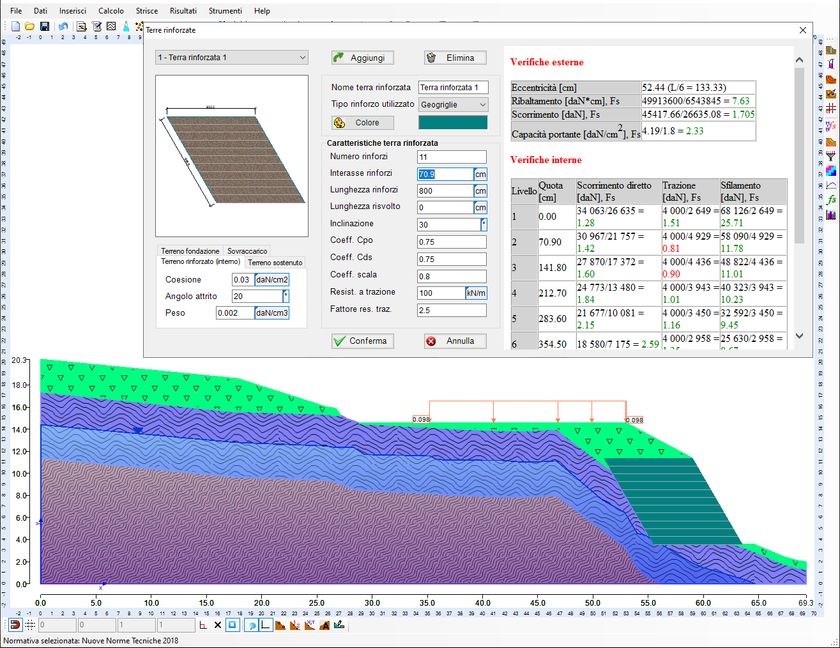
The types of intervention that can be entered are retaining walls, active and passive tie-rods, reinforced soils, piles and steps. Loads can be concentrated or distributed.
The calculation methods implemented are: Fellenius, Simplified Bishop, Simplified Janbu, Full Janbu, Morgenstern & Price, Spencer and Sarma.
Breaking surfaces can be circular in shape and be generic, passing through one or two points, tangent to a polyline, limited upstream and downstream and above a break. The sliding surfaces can also have a generic shape, defined by the designer.
By performing the calculation, the minimum and maximum safety factors and the surfaces to which they correspond are obtained. All surfaces can be examined, displaying their geometric characteristics, the factor of safety, the division into strips and the stresses acting on each strip.
For reinforced soils, the calculation of external, internal and compound verifications is performed.
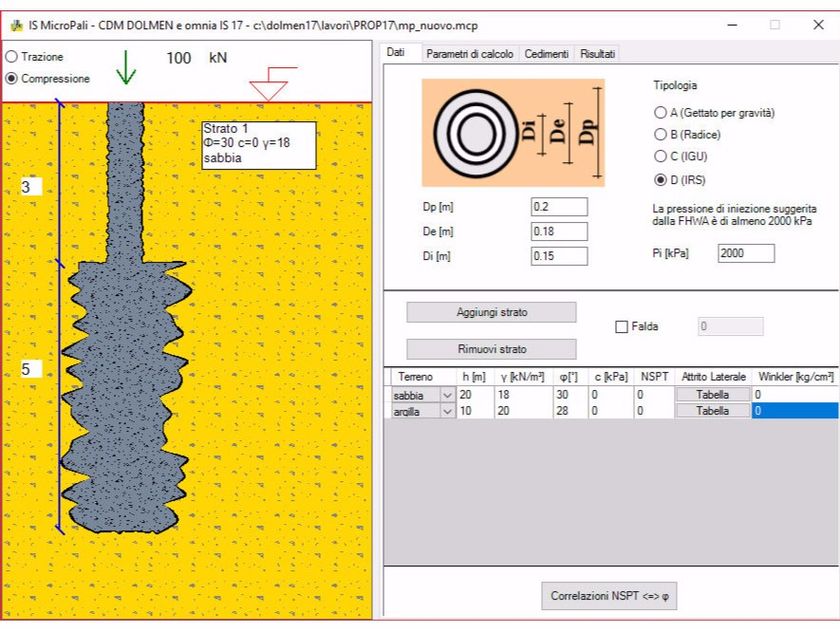
For ties and piles, a predimensioning report is available; for ties, details of the calculation of the resistance to buckling are given, and for piles, the action between pile and soil is given.
IS GeoStrati
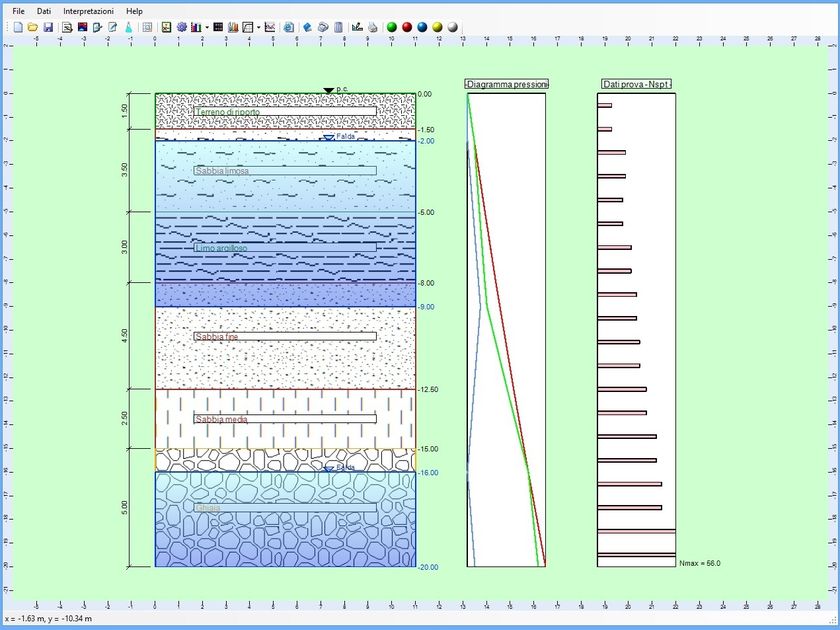
IS GeoStrati is the software for the interpretation of the results of penetrometric tests; it has a dedicated Cad within it, which draws the stratigraphy, allowing the choice of screening from more than 60 available, its elevations and represents the stratum or strata that may be present. At the same time, the trend of total and effective vertical stresses and hydrostatic pressure is illustrated. Finally, the data obtained from the test are shown. Both graphs can be queried with a double click of the mouse.
The programme calculates geotechnical soil parameters, in particular: relative density, shear strength angle, modulus of elasticity, shear modulus, undrained cohesion, liquefaction potential, etc.
Numerous correlations from technical literature are available to determine these values. The results are represented graphically, as a function of depth, by means of coloured histograms or in the form of a table.
As far as the C.P.T. test is concerned, the stratigraphy can be obtained automatically. In the case of the D.P. test, various instruments are provided and it is also possible to insert a "user" penetrometer with the characteristics desired by the user.
For each type of test, a model is available that shows the stratigraphic trend, the representation of the measured data and the obtained values of relative density and friction angle.
Is GeoRocce
Is GeoRocce performs quality classification of rock clusters using the following theories:
Bieniawski classification (1976)
Bieniawski classification (1989)
Barton classification (Qsystem 1974)
GSI method (Geological Strength Index)
Deere classification (1964)
Wickam classification (1972)
Romana classification (1985)
JASAREVIC & KOVACEVIC classification
ROBERTSON classification
A further application of the software is the possibility of entering the positions of discontinuities, in Dip and Dip-direction coordinates, and representing them on a polar stereogram. These can be entered individually or by pasting from Excel®; the software calculates the percentage density of the poles by displaying, via a coloured scale, the areas having the same value.
Is GeoRocce offers the Markland test to identify potential instability planes of a rock face. Based on the orientation of the discontinuities and the average friction angle, an indicative assessment of the stability of the wedge can be made.
Is GeoRocce performs the planar stability analysis according to the discontinuities present and the rock face. The programme evaluates the safety factor based on possible slip situations.
In the event that the potentially unstable solid, formed by the intersection of the discontinuity planes and the face, does not fall under the assumption of planar kinematics, the possibility of sliding along the base of the wedge must be taken into account by performing the stability calculation.
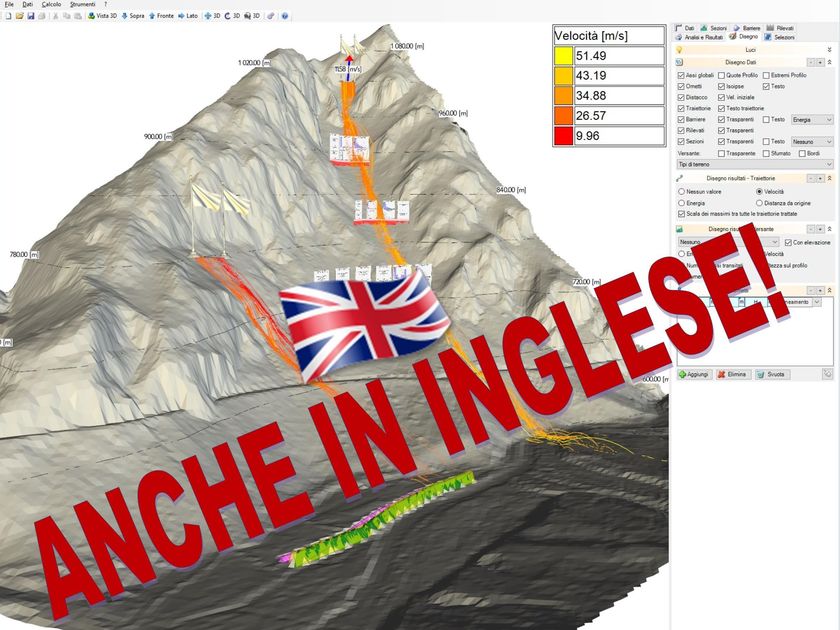
Is GeoRocce finally proposes the Lumped Mass method for the analysis of rockfall along a slope allowing the dimensioning of rockfall barriers.
33
0